
Before Separation: Secrecy, Betrayal, and Psychological Control
Part Two of From Secrecy to Systems
Content note: This entry discusses sexual betrayal, emotional abuse, intimidation, mental-health weaponization, and coercive control.
The documentary record of my relationship did not begin after separation. It began while I was still living inside the relationship, trying to understand what was happening and asking for repair.
That distinction matters.
These were not accusations assembled only after I left. They were contemporaneous records created while I was asking for counseling, requesting healthier communication, setting boundaries, and trying to preserve our family.
The Early Record: 2008 and 2009
A December 4, 2008 email documents relationship distress while I was still attempting to understand and repair the dynamic.
Less than two months later, a January 29, 2009 written communication documented anxiety, escalating conflict, rhetorical questioning used as a weapon, and my request for counseling and healthier communication.
Those records show that I was identifying the problem and seeking help more than fifteen years before the relationship ended.
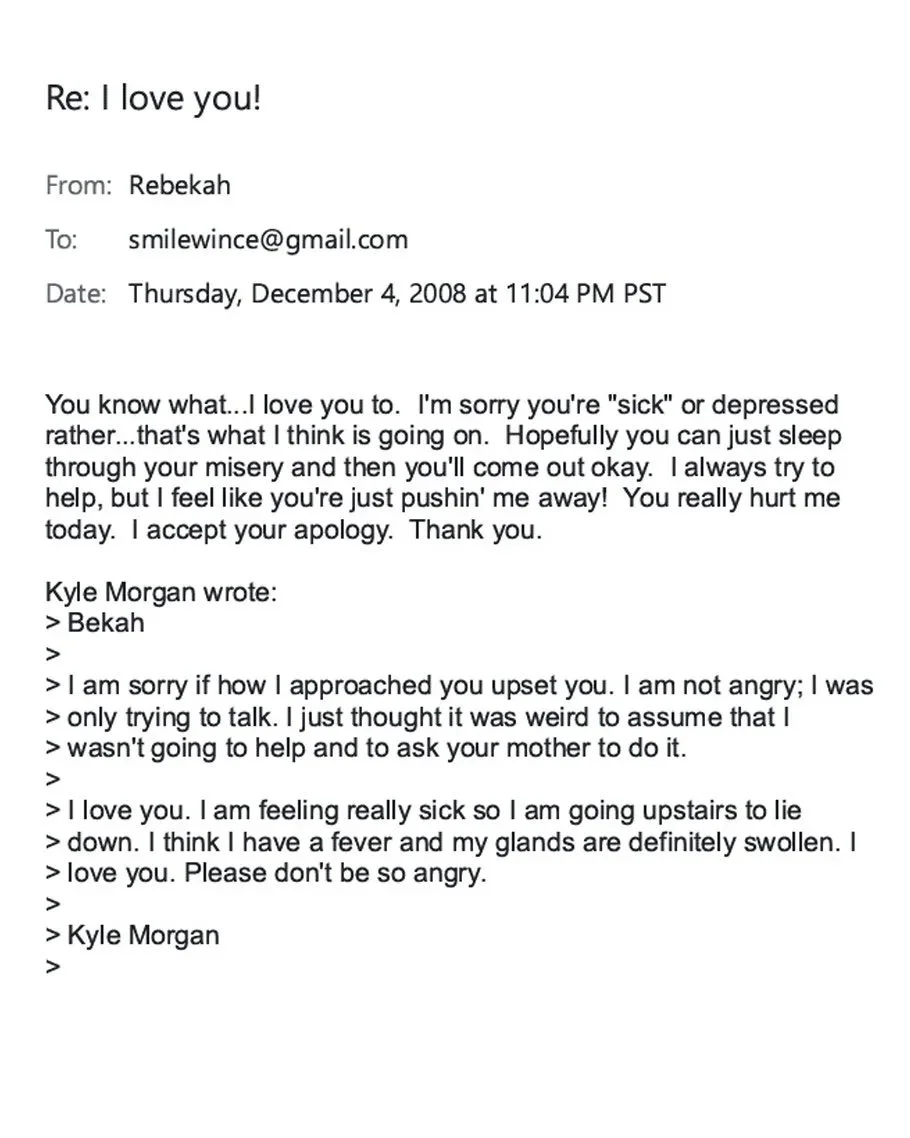
A December 4, 2008 email documenting relationship distress while I was still attempting to understand and repair the dynamic.
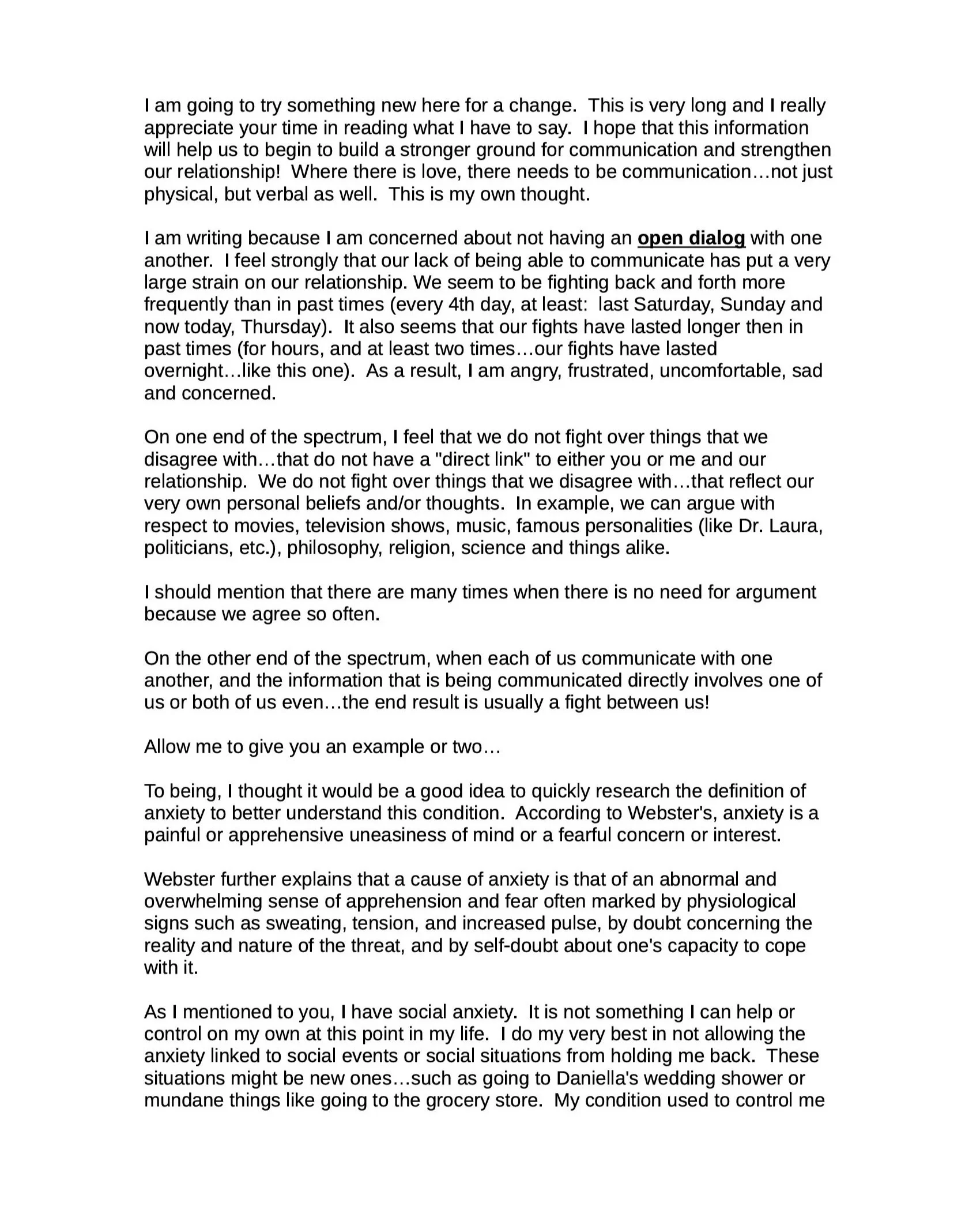
January 29, 2009 communication, page 1 of 6. I describe escalating, hours-long conflict, the breakdown of open dialogue, and the anxiety I experienced while asking for healthier communication.
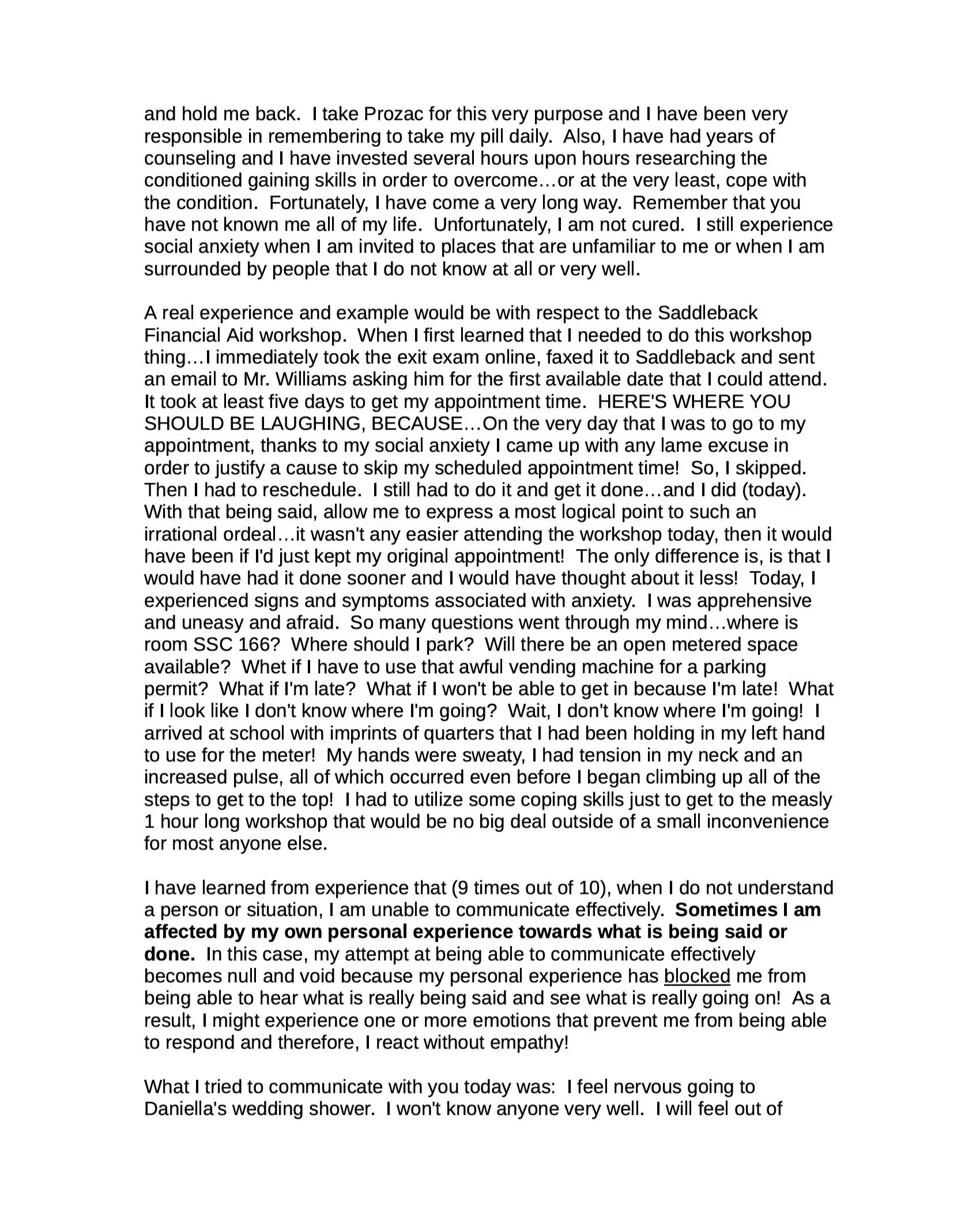
January 29, 2009 communication, page 2 of 6. I explain my treatment and coping strategies for social anxiety, describe its physical effects, and distinguish expressing fear from refusing to participate.
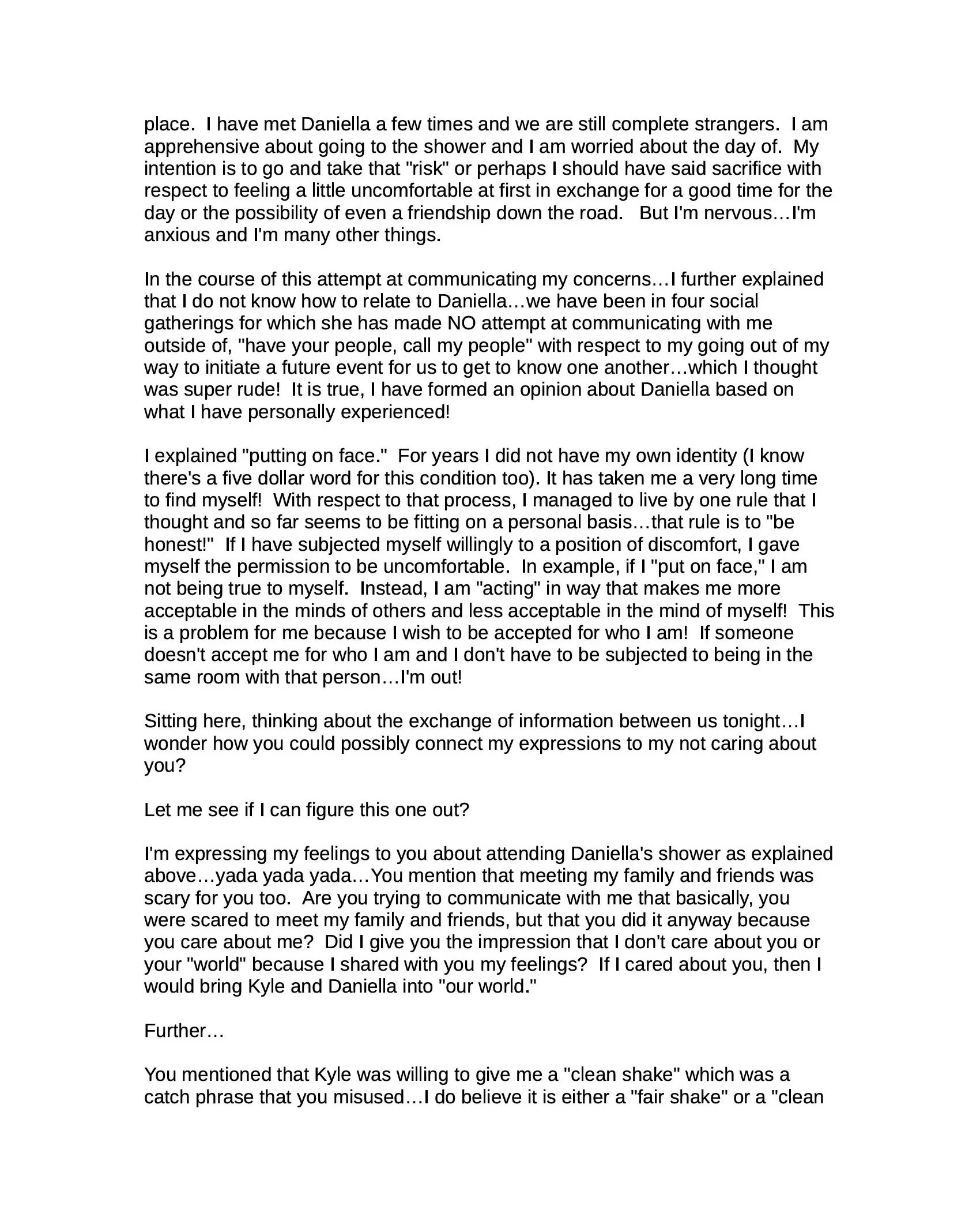
January 29, 2009 communication, page 3 of 6. I explain that I still intended to attend the shower despite my anxiety and describe my effort to communicate honestly without having my feelings interpreted as rejection.
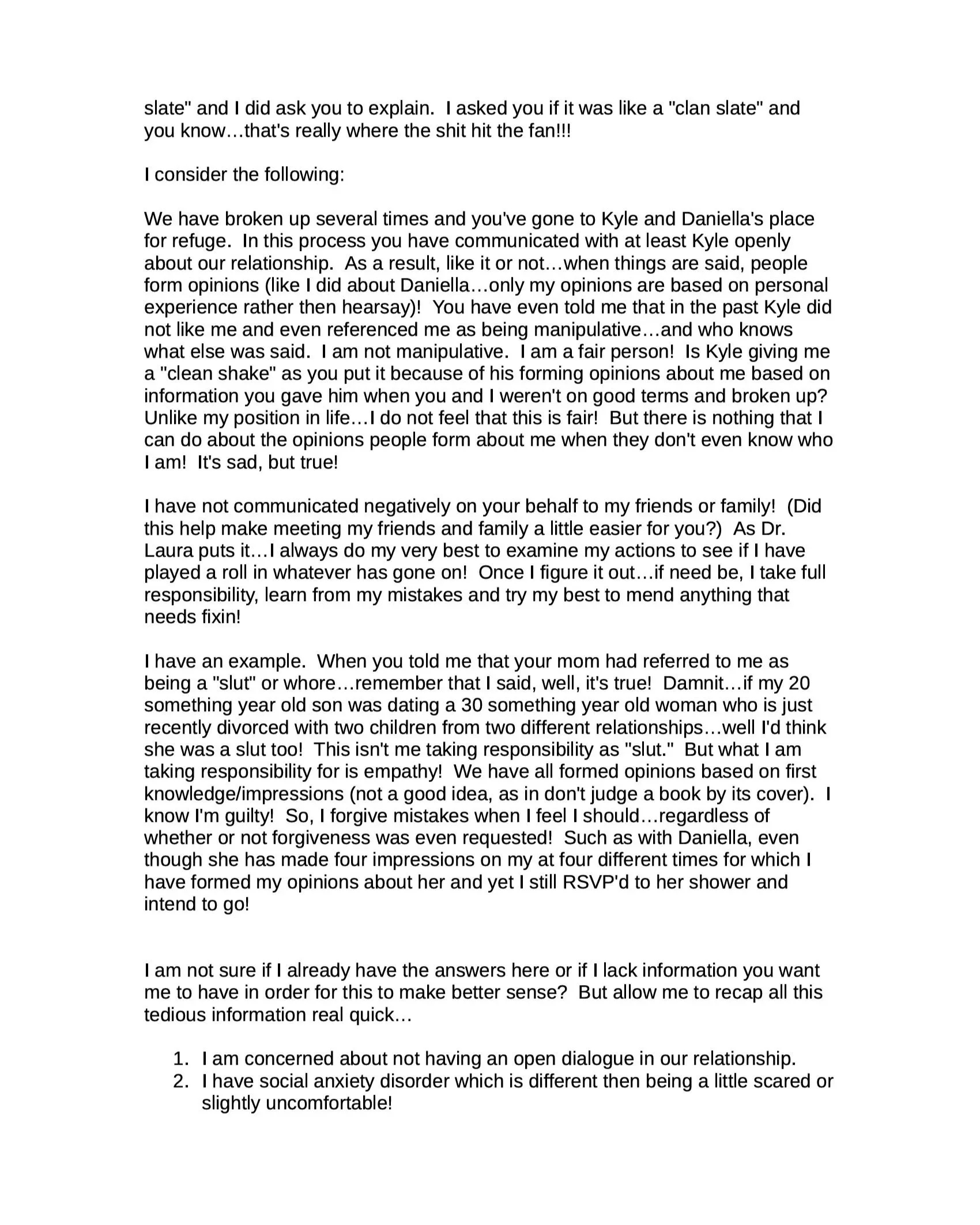
January 29, 2009 communication, page 4 of 6. I describe concerns about opinions formed through third parties, my effort to examine and take responsibility for my own conduct, and my request for empathy and open dialogue.
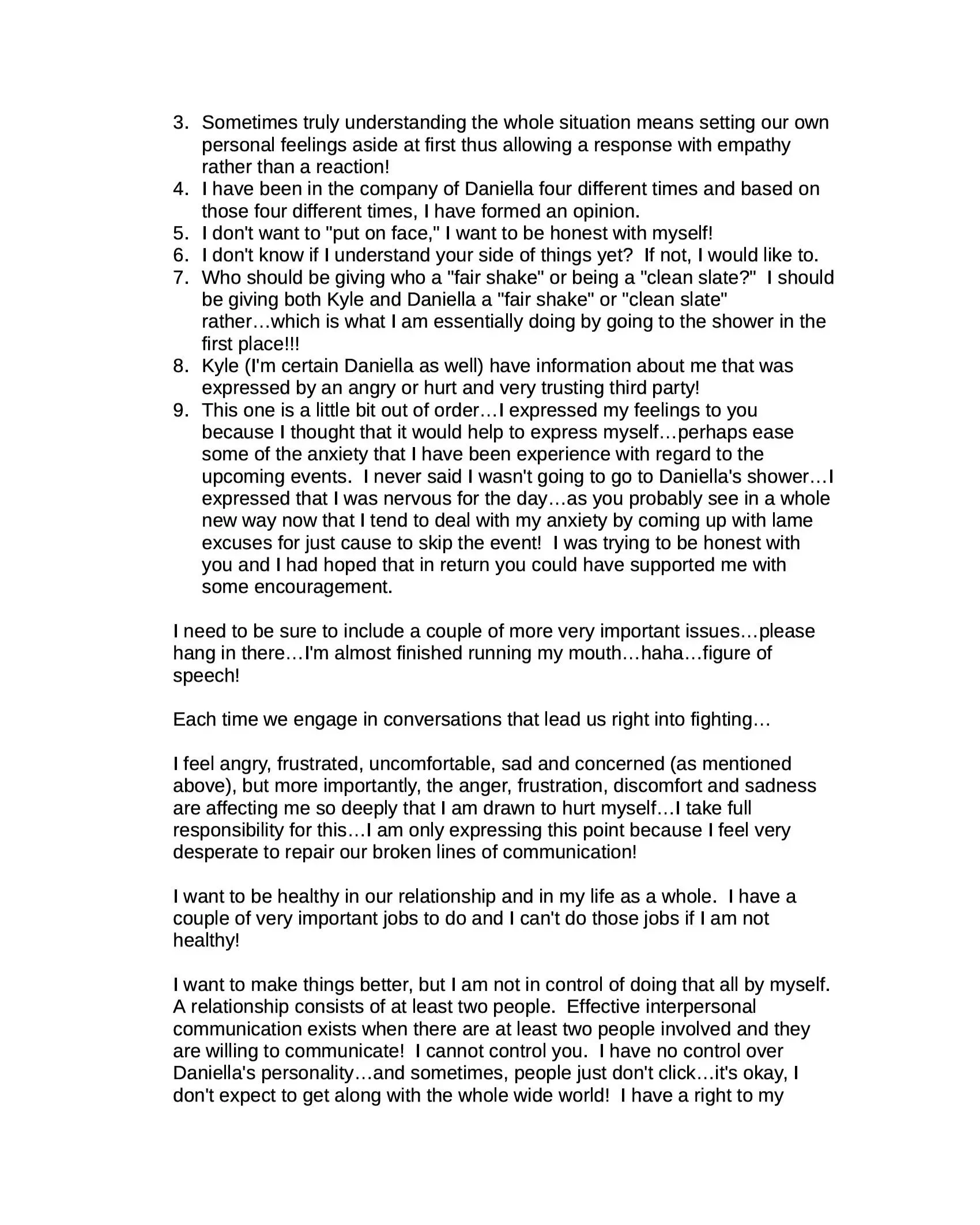
January 29, 2009 communication, page 5 of 6. I ask for empathy, understanding, and encouragement and document severe emotional distress, including thoughts of self-harm, while stating that I could not repair the relationship alone.
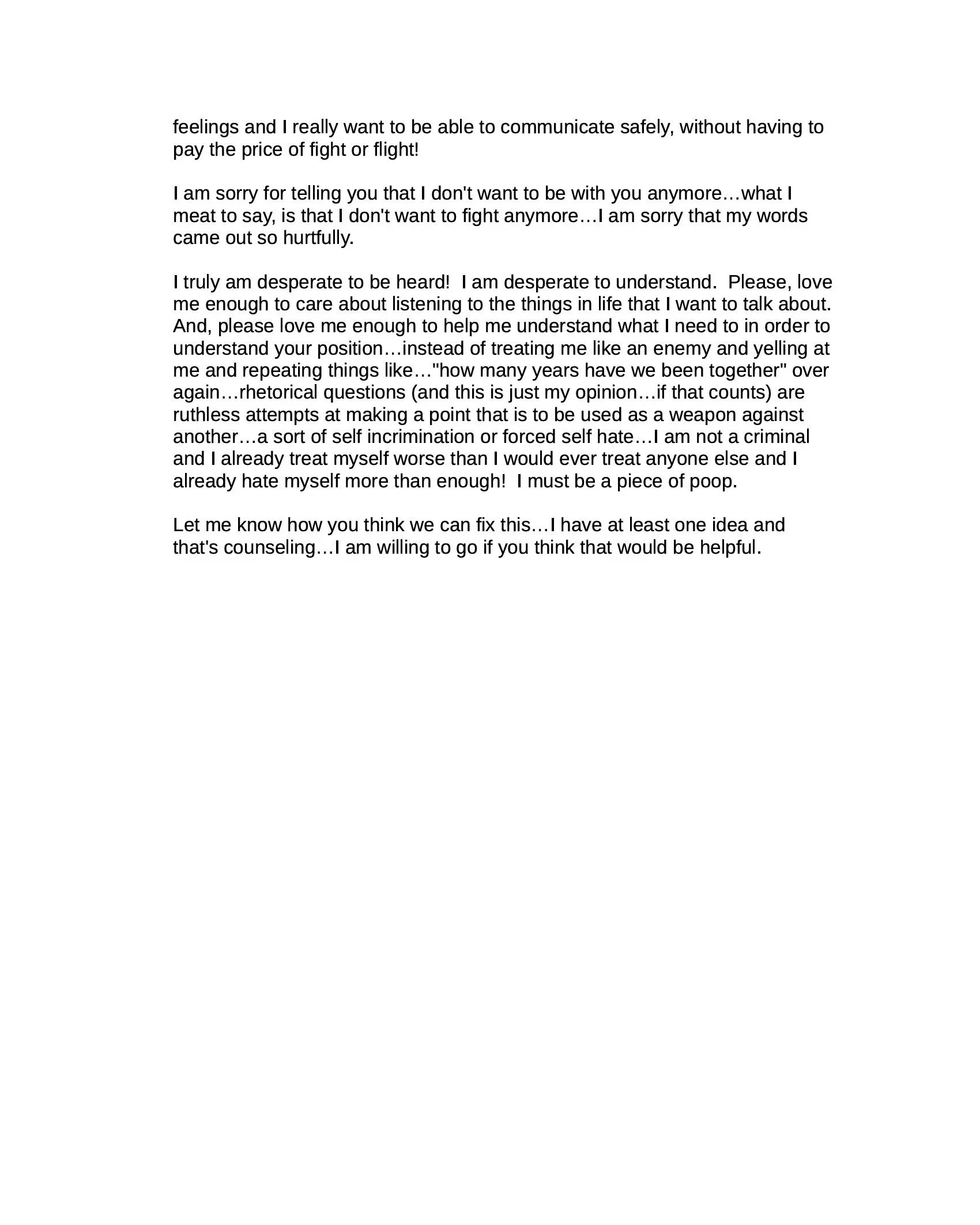
January 29, 2009 communication, page 6 of 6. I ask to communicate without yelling or entering a fight-or-flight response, describe repeated rhetorical questioning as a weapon, and end by proposing counseling.
Read the complete January 29, 2009 archive entry →
April 2016: Fear Preserved in Real Time
On April 28, 2016, an ordinary conversation about our children expanded into approximately seven hours of insults, accusations, sexual interrogation, and the use of my medication and emotional state against me.
During that exchange, I wrote:
“You scare me.”
“That’s why I left. Cause you scare me.”
“I’m just not in a place mentally where I feel safe talking to you about my hurts and resentments.”
He eventually responded:
“You are not wrong.”
“I am sorry for trying to hurt you with my ugly insults and language.”
His response matters because it is not my later interpretation of his intention. It is his contemporaneous acknowledgment that he was trying to hurt me through insults and language.
Within five days, he shifted from telling me, “Those boys have an awesome mom,” to calling me “an ungrateful wife and mother.”
That reversal illustrates how praise, contempt, reassurance, and degradation could be alternated in ways that destabilized my understanding of the relationship and of myself.
The surrounding messages preserve the escalation across multiple days:
July 2018: Emotional Depletion
A July 12, 2018 letter documents further emotional depletion and the threat of divorce.
I described betrayal, half-truths, chronic blame, impossible standards, repeated promises, and the experience of being emotionally, mentally, and physically depleted.
Read “Unrequited Love, Weaponized,” the complete July 12, 2018 archive entry →
Other records from this period reflect emotional exhaustion and concerns about the treatment of the children.
A Concealed Parallel Life
Over time, I came to understand that his outside sexual activity was broader than an isolated affair or occasional pornography use.
Based on information I discovered and preserved, I concluded that it involved some combination of adult venues, anonymous or paid contact, sex workers, escorts, massage venues, hookup platforms, hotels, private meetings, concealed communications, and activity connected to work time, coworkers, vehicles, and unusual absences from home.
I also discovered sexual betrayal within my own support system, including sexual contact with my best friend. That compounded the injury and further damaged my ability to trust both my partner and the people around me.
He often presented himself at home as exhausted, overworked, unavailable, or “burnt out,” while apparently retaining time, energy, transportation, and attention for concealed activity elsewhere.
That contradiction left me carrying family responsibilities while being told that my needs, questions, and observations were unreasonable.
I documented indicators that led me to conclude that my own vehicle had been used in connection with sexual betrayal during a period when he had access to it. He generally used my car only occasionally for household errands or travel associated with his work, including yoga instruction in public parks.
The limited access, unexplained physical indicators inside the vehicle, and information I later connected to a concealed relationship became part of the larger record. I present this as my documented observation and conclusion, not an adjudicated finding.
Sustained deception deprived me of information required to make informed choices about sexual consent, sexual health, finances, and whether I wished to remain in the relationship.
When I attempted to obtain that information, the response was commonly denial, anger, ridicule, or an attack on my credibility.
The Argument Was Redirected Toward Me
When confronted, he did not consistently move toward disclosure, accountability, or repair. He moved toward minimization, deflection, blame shifting, and narrative reversal.
My attention was redirected away from the underlying conduct and toward the way I discovered it, the tone in which I asked, my emotional reaction, my medication, my mental health, or some unrelated imperfection of mine.
The issue disappeared beneath an argument about whether I was permitted to notice it.
Over time, this created a one-way system. I was expected to absorb the injury, continue parenting, maintain the household, remain supportive, and stop asking for the truth.
My distress was treated as the cause of the conflict rather than a response to recurring betrayal and intimidation.
Information itself became a form of control. Communications were hidden. Explanations shifted. I did not know what information was complete, what had been deleted, what had been recorded, or how private communications might later be presented.
He had extensive access to my phone and personal information. I experienced recordings and selected fragments of conflict being used without the broader context that explained what preceded my reaction.
Degrading labels such as “sick,” “gross,” “crazy,” and “ungrateful” replaced factual answers. My health, medication, emotional distress, and reactions to prolonged mistreatment were used as evidence that I was unreliable.
When I attempted to establish boundaries, compliance was often temporary. The underlying pressure returned through new arguments, conditions, guilt, contempt, intimidation, or threats.
Home became a place where I monitored tone, timing, doors, movements, and safety. I did not consistently feel safe even during ordinary private activities such as showering.
The result was not simply emotional pain. It was prolonged disorientation.
I often knew something was wrong before I could identify or prove what was happening. Small inconsistencies, altered routines, unexplained absences, hidden communications, bodily alarm, and sudden shifts in behavior accumulated before my conscious mind could organize them into a coherent explanation.
The early records preserve that process in real time.
They show that the fear, confusion, and requests for repair existed long before the final separation, and long before public documentation became necessary.
Continue the Series
← Part One: From Secrecy to Systems
Part Three: Dependency by Design →